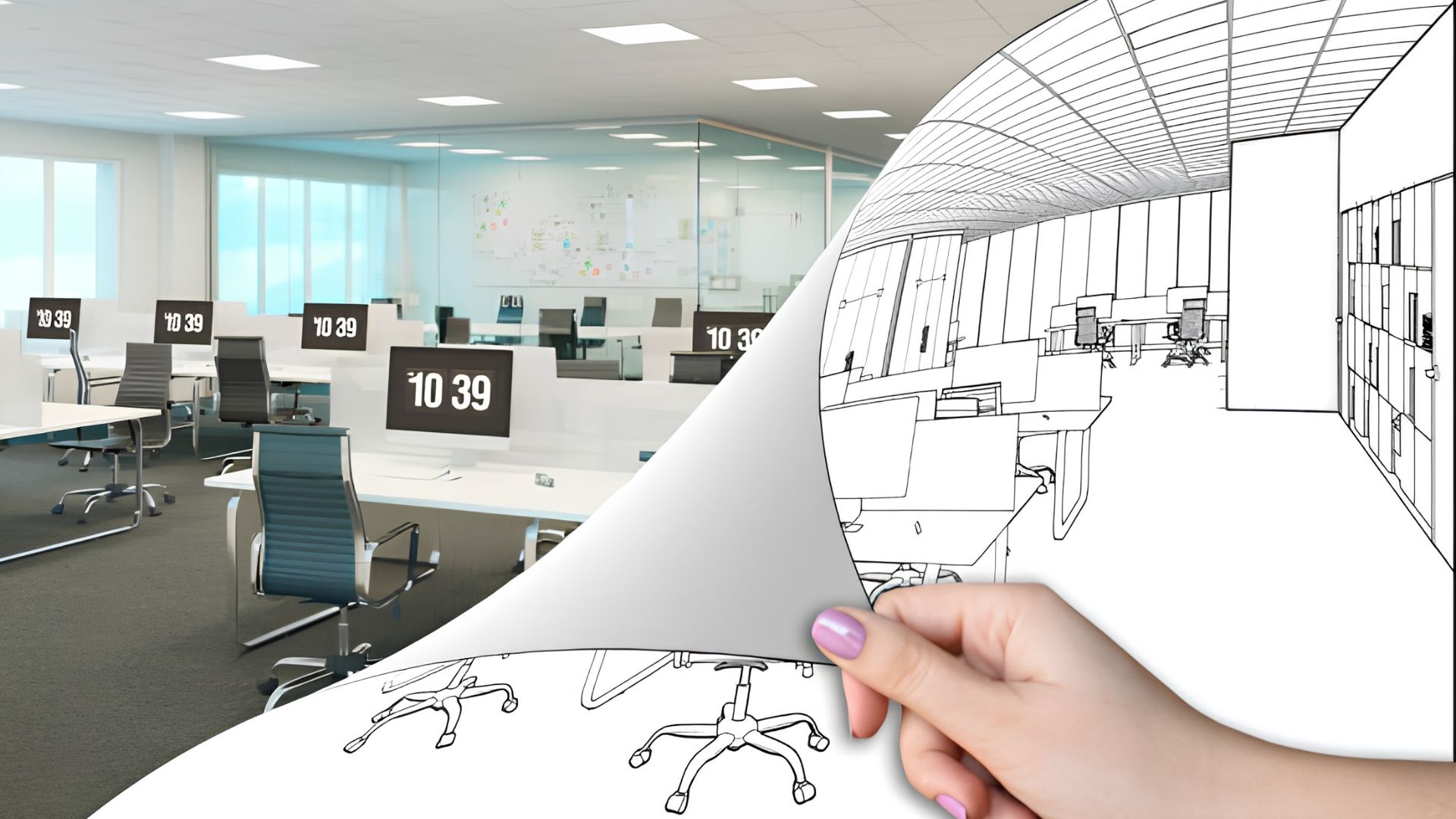
A test fit is often where office planning begins, but it is not where the process ends.
Many businesses in Cape Town and Durban stop at the test fit stage, believing they have enough information to make a final decision about an office space. While a test fit confirms whether a space can physically work, it does not yet create a functioning workplace.
This is where the next phase becomes critical.
Once a test fit has identified layout potential, businesses must move into detailed space planning, design development and full office fit out execution. Without this progression, companies risk choosing a space that looks viable on paper but fails in real operational use.
This is also where many commercial projects start to lose momentum. Decisions are delayed, scope becomes unclear, and the link between feasibility and execution is never properly established.
Understanding what happens after a test fit is essential for any business preparing for a relocation or office upgrade.
Proturnkey works with businesses across Cape Town and Durban to bridge this gap, turning early feasibility studies into fully functional, purpose-built work environments through structured turnkey delivery.
What a test fit actually tells you (and what it does not)
A test fit is a high-level spatial analysis that shows how a potential office space can accommodate a company’s headcount, departments and basic functional requirements.
It helps answer critical early questions such as whether the space is too small, too large or structurally unsuitable for the intended use. It also gives a rough indication of layout efficiency and circulation.
However, a test fit does not account for detailed design, materials, services or construction constraints. It does not confirm how acoustics will perform, how electrical layouts will be distributed, or how furniture will integrate into the space.
In many Cape Town and Durban commercial buildings, structural elements such as columns, service risers and ceiling constraints only become relevant in later stages of planning.
This means a test fit should never be treated as a final design solution. It is a decision-support tool, not a build-ready plan.
The next stage is where feasibility is translated into a fully developed workplace strategy.
The transition from test fit to space planning
Once a test fit confirms that a space is viable, the next step is detailed office space planning.
This stage moves beyond basic layout to consider how the business actually operates on a daily basis. It defines how teams interact, how departments are positioned and how movement flows through the office.
Space planning also begins to introduce practical constraints such as meeting room requirements, breakout areas, reception design and storage needs.
In Cape Town and Durban, where office layouts vary significantly between buildings, this stage is essential for aligning design intent with physical reality.
Poor transition between test fit and space planning often results in inefficient layouts that require costly changes during construction.
A structured approach ensures that the test fit is refined into a detailed, buildable layout that supports both operational efficiency and future growth.
Proturnkey integrates space planning directly after feasibility analysis, ensuring continuity between early-stage assessment and full office fit out delivery.
Turning space plans into a full office fit out
Once space planning is finalised, the project moves into design development and office fit out execution.
This is where conceptual layouts become physical environments. Materials are selected, technical drawings are produced, and construction sequencing is defined.
At this stage, coordination becomes critical. Electrical layouts must align with workstation design, HVAC systems must support occupancy levels, and furniture procurement must match spatial requirements.
Without proper management, this is where many office projects begin to experience delays and budget overruns.
A turnkey office fit out approach ensures that all elements are coordinated under one delivery system. Instead of separate contractors working in isolation, one team manages design, procurement, construction and installation.
This reduces risk and ensures that the original intent established during the test fit and space planning stages is maintained through to completion.
Proturnkey manages this entire process across Cape Town and Durban, ensuring consistency from concept through to final handover.
Common mistakes after a test fit
One of the most common mistakes businesses make is assuming that a test fit is close enough to a final design. This often leads to rushed decisions about leasing or committing to a space too early.
Another issue is skipping detailed space planning and moving directly into construction. This creates gaps between operational needs and physical execution, which only become visible once the office is occupied.
Businesses also underestimate how long procurement and approvals take in commercial environments. Without early coordination, lead times can significantly impact project delivery.
In Cape Town and Durban, building-specific constraints such as access restrictions, municipal approvals and landlord requirements can further complicate timelines.
The most successful projects are those that treat the test fit as the beginning of a structured process rather than the end of decision-making.
Why cape town and durban businesses need a structured approach
Commercial office spaces in Cape Town and Durban are highly diverse, ranging from modern business parks to older converted buildings.
Each comes with its own structural limitations, compliance requirements and logistical challenges.
A test fit alone cannot account for these variables in detail. Only a structured planning and fit out process can translate early feasibility into a fully functional workplace.
Local expertise is also critical. Understanding how different buildings operate, how contractors access sites, and how materials are delivered can significantly impact project timelines.
This is where Proturnkey provides value by combining local knowledge with end-to-end project delivery.
By managing office interior design, space planning and office renovations under one integrated system, businesses avoid the fragmentation that often leads to delays and cost escalation.
Common Questions About Test Fits and Office Space Planning
What is the purpose of a test fit in office planning?
A test fit is used to evaluate whether a potential office space can physically accommodate a company’s requirements. It provides a high-level layout concept but does not include detailed design, materials or construction planning.
What happens after a test fit is approved?
After a test fit is approved, the process moves into detailed space planning, design development and office fit out execution. This ensures the layout becomes fully functional and ready for construction.
Is a test fit enough to start an office fit out?
No. A test fit is only a feasibility tool. A full office fit out requires detailed drawings, material selection, technical planning and coordinated construction management.
How long does it take to move from test fit to completion?
Timeframes vary depending on project size, approvals and complexity. Typically, the process includes planning, design and construction phases that can span several weeks to a few months.
Why is space planning important after a test fit?
Space planning refines the test fit into a practical, operational layout. It ensures the office supports workflows, team structures and future growth before construction begins.
Final thoughts on test fits and office fit out progression
A test fit is an essential starting point in office planning, but it is only one part of a much larger process.
Without structured space planning and a coordinated office fit out approach, businesses risk turning early feasibility into poorly executed workplaces that do not support day-to-day operations.
The real value comes from what happens after the test fit — when strategy, design and execution are aligned into a single delivery process.
Proturnkey supports businesses across Cape Town and Durban by managing this entire journey, from initial feasibility through to final handover, ensuring offices are not only viable on paper but fully functional in reality.
If you are planning an office move or upgrade, the next step after your test fit is where the success of your project is truly defined.