Choosing a new office space is an exciting step for any business.
Whether you are relocating, expanding into a larger environment or opening a new branch in Cape Town or Durban, the space you choose will shape how your team works and how your business is experienced every day.
But one of the biggest mistakes businesses make is choosing a space based purely on appearance, location or size without understanding how it will actually function once occupied.
A space may look ideal during a viewing, but that does not always mean it will support your team, your workflow or your long-term growth.
This is where a test fit becomes one of the most valuable tools in the decision-making process.
What Is a Test Fit?
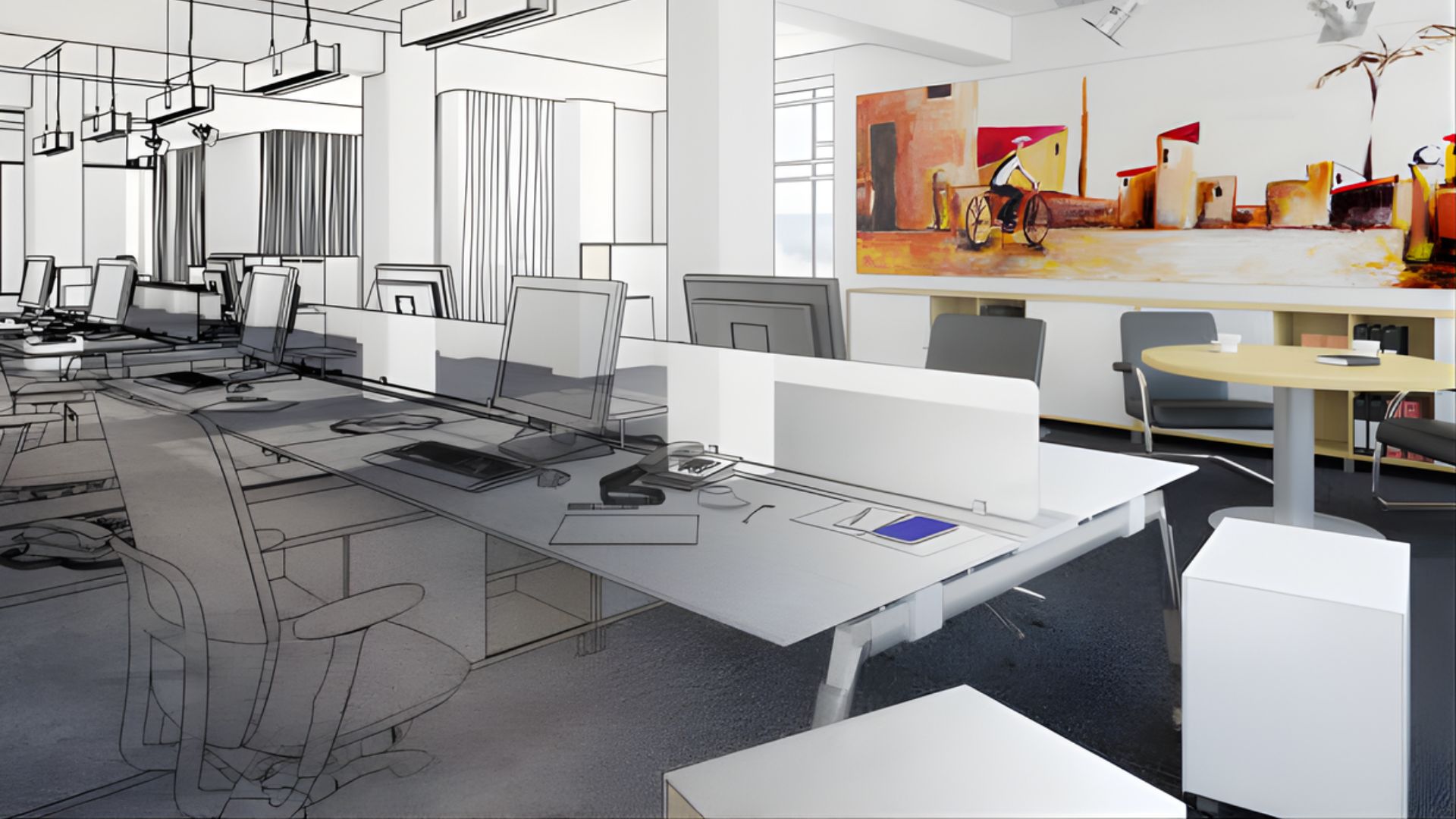
A test fit is a preliminary office layout used to determine whether a commercial space can accommodate the needs of your business before a lease is signed.
It is a strategic planning exercise that maps out how your office could function within the proposed space. This includes elements such as workstations, meeting rooms, private offices, collaboration areas and circulation throughout the environment.
Rather than relying on assumptions or empty floor plans, a test fit gives businesses a realistic understanding of how the space will work in practice.
It helps answer one very important question before any major commitment is made: is this actually the right space for your business?
Why Test Fits Matter
Many businesses assume that if a space has enough square meterage, it will work.
In reality, office functionality depends on much more than size alone.
The layout of the building, the shape of the floor plate, existing services and the overall flow of the environment all play a role in determining whether a space can function efficiently.
Without a test fit, businesses often only discover limitations after the lease has already been signed and the fit-out process has begun. By that stage, changes become more expensive and far more difficult to resolve.
A test fit allows these conversations to happen early, when there is still flexibility in the decision-making process.
The Benefits of a Test Fit
One of the biggest advantages of a test fit is clarity.
It gives decision-makers the opportunity to visualise how the office will function before committing to the space. This often speeds up decision-making and removes uncertainty from the process.
A test fit also helps businesses make better use of their space. Poorly planned layouts can lead to oversized meeting rooms, cramped workstations or large underutilised areas that ultimately waste valuable square meterage.
For businesses operating in Cape Town and Durban, where commercial space comes at a premium, efficient space planning has a direct impact on both functionality and cost.
Another major benefit is identifying potential challenges early. Structural limitations, layout restrictions or capacity concerns can all be flagged before construction begins, reducing the risk of costly changes later on.
In some cases, a test fit can also support discussions with landlords before agreements are finalised, particularly if upgrades or modifications to the space are required.
What Happens During a Test Fit?
The process starts with understanding how your business operates.
Factors such as team size, meeting requirements, privacy needs and future growth plans are all considered when assessing the space.
From there, a preliminary layout is developed to show how the office could function in practice. While this is not a final interior design, it provides a clear direction on whether the space is feasible and how it can be optimised.
This stage is often where businesses realise that a space they initially overlooked may actually work extremely well, or alternatively, that a space they loved visually may not support their operational needs at all.
Why Businesses in Cape Town and Durban Are Using Test Fits More Often
The way businesses use office space has changed significantly in recent years.
Modern workplaces are expected to support flexibility, collaboration and productivity while still making efficient use of available space.
At the same time, businesses are becoming more conscious of rising commercial property costs and the importance of making informed decisions before signing long-term leases.
This has made test fits an increasingly important part of the commercial property process in cities like Cape Town and Durban.
Instead of committing first and solving problems later, businesses are looking for clarity upfront.
Test Fits Are Not Only for Large Corporate Offices
There is often a misconception that test fits are only relevant for large companies or major corporate headquarters.
In reality, businesses of all sizes benefit from understanding how their office will function before making a commitment.
Even smaller offices can experience challenges with poor circulation, insufficient meeting space or layouts that simply do not support how the team operates day to day.
A test fit helps businesses avoid these issues before they become expensive problems.
The Difference Between a Test Fit and Full Office Design
A test fit is an early-stage planning exercise focused on functionality and feasibility.
It is not a final design or completed interior concept.
Once the space has been confirmed through the test fit process, the project can then move into the detailed design and fit-out stage where finishes, furniture, branding and aesthetics are developed further.
This creates a far more structured and informed approach to the overall project.
FAQ: Office Test Fits
Do I need a test fit before signing a lease?
A test fit is highly recommended because it confirms whether the space can realistically support your business requirements before you commit financially.
Can a test fit help reduce costs?
Yes. Identifying layout or feasibility issues early can help prevent costly changes during construction or fit-out.
Are test fits only for large offices?
No. Businesses of all sizes can benefit from understanding how a space will function before making a decision.
Does a test fit include furniture layouts?
Yes. Test fits typically include preliminary workstation and furniture layouts to help visualise the space.
How long does a test fit take?
Depending on the size and complexity of the project, a test fit can often be completed within a few days.
Final Thoughts
Choosing a commercial office space should never be based on square meterage alone.
A space may appear suitable during a viewing, but without understanding how it will function in practice, businesses risk making decisions that create long-term operational challenges.
A test fit provides clarity before commitment.
For businesses in Cape Town and Durban, it has become one of the most valuable steps in ensuring that the chosen office space not only looks right, but works properly for the people using it every day.