
Your office was probably designed around a very different working day. Desks were allocated according to departments, meeting rooms were planned around traditional team structures, and administrative areas were organised to accommodate tasks that required considerable manual effort. The number of employees, the nature of their responsibilities and the way information moved through the business all influenced the physical layout.
Then artificial intelligence entered the workplace, and some of those assumptions began to change. Tasks that once required hours of research, document preparation, data processing or routine administration can increasingly be supported by AI-powered tools. Employees are beginning to spend less time on certain repetitive activities and potentially more time reviewing information, solving problems, making decisions and managing relationships. Yet the physical office may look exactly as it did five or ten years ago. The same departments occupy the same areas, the same workstations are arranged in the same rows, and the meeting rooms still serve the purposes they were originally designed for. This raises an interesting question for businesses in Cape Town, Durban and across South Africa: If the work has changed, should the workplace change too?
Your Office Was Designed Around Jobs That Are Already Changing
Traditional office layouts were often shaped by the responsibilities of individual departments. Administrative teams required workstations, filing systems and access to shared equipment, while finance departments needed areas for processing information and managing records. Sales teams occupied their own spaces, management worked from separate offices, and meeting rooms were allocated according to established organisational structures. Artificial intelligence is beginning to influence how some of these activities are performed. Software can assist with preparing reports, summarising documents, organising information, responding to routine enquiries and identifying patterns in large volumes of data. These capabilities do not eliminate the need for employees, but they can change how employees spend their time and where human involvement adds the greatest value.
Consider an administrative team that previously spent much of its day capturing information, preparing standard documents and distributing reports. If AI tools begin handling parts of that routine workload, employees may take on more responsibility for reviewing outputs, resolving exceptions, communicating with clients and supporting other departments. Their work becomes less about completing a predictable sequence of tasks and more about exercising judgement across different activities. The office, however, may still be arranged around the original workflow. Dedicated areas, fixed departmental boundaries and existing furniture arrangements may no longer reflect how frequently people need to interact. The question is not whether every business needs a completely new layout, but whether its current workplace still supports the work employees are actually doing.
Fewer Routine Tasks Do Not Automatically Mean Fewer Employees
One of the biggest assumptions surrounding AI is that automation will inevitably result in smaller teams and reduced office requirements. Although some businesses may eventually operate with fewer people in particular roles, others may use the time saved to expand their services, improve customer support or take on additional work. AI adoption can also create new responsibilities involving quality control, technology management, information security and the supervision of automated processes. A business that introduces AI into its customer service operations, for example, may reduce the volume of routine enquiries handled manually. Its employees could then spend more time resolving complex customer problems, managing important relationships and providing specialist assistance. The number of employees might remain unchanged, even though the nature of their work becomes considerably different.
This distinction matters when businesses begin reviewing their commercial premises. Reducing the number of desks simply because certain tasks have been automated could be premature, particularly if new responsibilities create different workplace requirements. A better approach is to examine how roles, working patterns and team interactions are evolving before making permanent decisions about floor space. Proturnkey previously explored the importance of understanding how teams work in Maximizing Productivity: The Role of Space Planning in Modern Offices. AI adds another consideration to that discussion because the activities performed by employees may change even when the overall headcount remains stable. Understanding those changes is essential before deciding whether an office needs fewer workstations, different facilities or simply a more appropriate arrangement of existing space.
What Happens to Departments When Workflows Begin to Overlap?
Imagine a company where the marketing department previously prepared its own reports, the finance department analysed financial information, and the operations team compiled separate performance summaries. Each department had established responsibilities, dedicated employees and familiar reporting processes. The office layout reflected those divisions because the work was organised around relatively distinct functions. AI-powered systems may increasingly help teams access, interpret and prepare information that previously moved through several departments. Marketing employees might work more closely with data specialists, operations managers may need regular input from technology teams, and finance professionals could spend more time advising business leaders rather than producing routine reports. The physical distance between departments may become less relevant than the frequency and nature of their interactions.
This does not mean that every company should abandon departmental areas or introduce a completely open-plan office. Some teams still require separation for confidentiality, concentration, security or specialist operational needs. The opportunity lies in identifying where working relationships have changed and whether the existing layout makes those relationships easier or more difficult. A business might discover that employees who previously worked independently now need frequent short discussions with colleagues in other departments. Alternatively, it may find that teams require fewer formal meetings because information is more readily available through shared systems. These observations provide a more reliable starting point for office planning than simply assuming that new technology requires a more modern-looking workplace.

Could AI Change the Type of Meeting Rooms Businesses Need?
Meeting rooms are among the most familiar features of commercial offices, but their purpose may evolve as AI becomes part of everyday business operations. Employees can already use digital tools to prepare agendas, summarise discussions, organise notes and assist with the preparation of presentations. As these capabilities become more integrated into working practices, businesses may begin questioning which meetings genuinely require a room full of people. Routine status updates and information-sharing sessions may become easier to manage through digital platforms and automated reporting. That could reduce the need for certain types of scheduled meetings, although the outcome will differ between organisations. At the same time, discussions involving complex decisions, sensitive matters, creative problem-solving and client relationships may continue to benefit from dedicated physical spaces.
The result could be a change in the mix of meeting facilities rather than a simple reduction in their number. A company might discover that its large boardroom is frequently underused while smaller rooms suitable for focused discussions are difficult to book. Another business may require better technology for reviewing AI-generated information collaboratively, particularly where teams need to compare options, question findings and make decisions. Before renovating or replacing existing meeting facilities, businesses should examine how those rooms are currently used and how that usage may change. Booking information, employee feedback and observations of everyday working patterns can reveal whether the current arrangement remains appropriate. The aim is to provide spaces that support meaningful interaction rather than preserving rooms simply because they have always been part of the office.
The Growing Importance of Human Judgement
AI may be capable of producing information quickly, but businesses still need people to determine whether that information is accurate, relevant and appropriate. Employees remain responsible for interpreting results, understanding context, protecting confidential information and making decisions that affect customers, colleagues and business operations. In many organisations, the ability to question and evaluate AI-generated outputs may become an increasingly important part of everyday work. This creates an interesting workplace consideration because reviewing information can require a different environment from processing routine tasks. Employees dealing with complex documents, financial decisions, sensitive client information or technical assessments may need uninterrupted periods of concentration. Constant interruptions, poor acoustics and limited access to private working areas can make that work more difficult.
However, those same employees may also need to consult colleagues, compare findings or discuss recommendations before making a final decision. A workplace that supports only individual concentration could become just as restrictive as one that offers only open collaboration areas. The challenge is understanding how employees move between these different activities during a normal working day. Businesses should therefore avoid assuming that AI-driven workplaces will automatically require more collaborative spaces or fewer private areas. The appropriate balance depends on the work being performed, the sensitivity of the information involved and the level of interaction required. A carefully planned office should support the human responsibilities that remain essential even as technology becomes more capable.
Will Every Employee Still Need the Same Type of Workstation?
The traditional office workstation was designed to provide employees with a relatively consistent environment throughout the working day. A desk, chair, computer and access to shared facilities were sufficient for many administrative and professional roles. Although equipment and technology have evolved, the basic arrangement has remained familiar across numerous commercial workplaces. AI-driven workflows may introduce greater variation in how employees perform their responsibilities. Someone might spend part of the day reviewing automated reports, another period speaking privately with clients and the afternoon working with colleagues to resolve a complex operational problem. The same person may require different levels of privacy, technology and interaction depending on the task.
That does not necessarily mean fixed workstations will disappear. Many employees benefit from having a consistent desk, particularly where specialist equipment, confidential information or concentrated work forms part of their responsibilities. The more useful question is whether every workstation needs to be identical and whether employees have access to appropriate alternatives when their tasks change. For businesses considering office space planning, this means looking beyond employee numbers and departmental allocations. Workstations, shared facilities and specialist areas should be considered in relation to the activities they support. A layout that reflects genuine working requirements is likely to provide more lasting value than one based on assumptions about what an AI-enabled office should look like.
The Technology May Be Digital, but the Building Is Still Physical
It is easy to focus on AI software and overlook the physical infrastructure required to support changing business operations. Employees may need reliable connectivity, appropriate power distribution, secure access to systems and suitable environments for video meetings or confidential discussions. Existing buildings may also have limitations that become more noticeable as businesses introduce new technology and working practices.
For example, an organisation adopting more cloud-based systems may need to review network reliability, wireless coverage and the availability of secure working areas. Teams conducting more video consultations could require improved acoustics, lighting and background privacy. Businesses introducing specialist equipment or local computing infrastructure may have additional electrical, cooling and security requirements that need professional assessment.
Not every AI application creates a need for new physical infrastructure, particularly where services are accessed through existing cloud platforms. However, the broader changes in technology use can expose weaknesses in an office that was originally planned around different requirements. These issues should be evaluated according to the company’s actual systems and operational needs rather than assumptions about AI technology. Proturnkey’s office renovation services include reviewing existing layouts and upgrading infrastructure where required. For businesses adapting to new workflows, this provides an opportunity to address practical limitations alongside changes to the interior layout. A workplace renovation should consider how technology, people and building services function together rather than treating each as a separate issue.
Should Businesses Renovate Now or Wait to See What AI Changes?
One of the most difficult decisions facing business owners is knowing when to invest in their premises. AI tools and working practices are still evolving, and organisations may not yet understand how adoption will affect every department. Committing to an expensive office transformation based on predictions that have not been tested could result in a layout that becomes unsuitable sooner than expected. However, waiting indefinitely can create its own problems. An office that already struggles with poor circulation, inadequate meeting facilities or unsuitable working areas may become increasingly frustrating as responsibilities change. Businesses need to distinguish between problems that exist today and possible future requirements that remain uncertain.
A sensible starting point is to review the current workplace alongside the organisation’s AI adoption plans. Management can identify which processes are changing, which employees are affected and whether those changes have already influenced the way space is used. Areas that clearly no longer support operations can then be prioritised, while less certain requirements can be accommodated through adaptable planning. This approach allows businesses to make improvements without pretending they can predict exactly how every role will evolve. It also reduces the temptation to undertake a complete renovation simply because AI has become an important business topic. The objective should be to create a workplace capable of responding to change rather than one designed around a single prediction of the future.
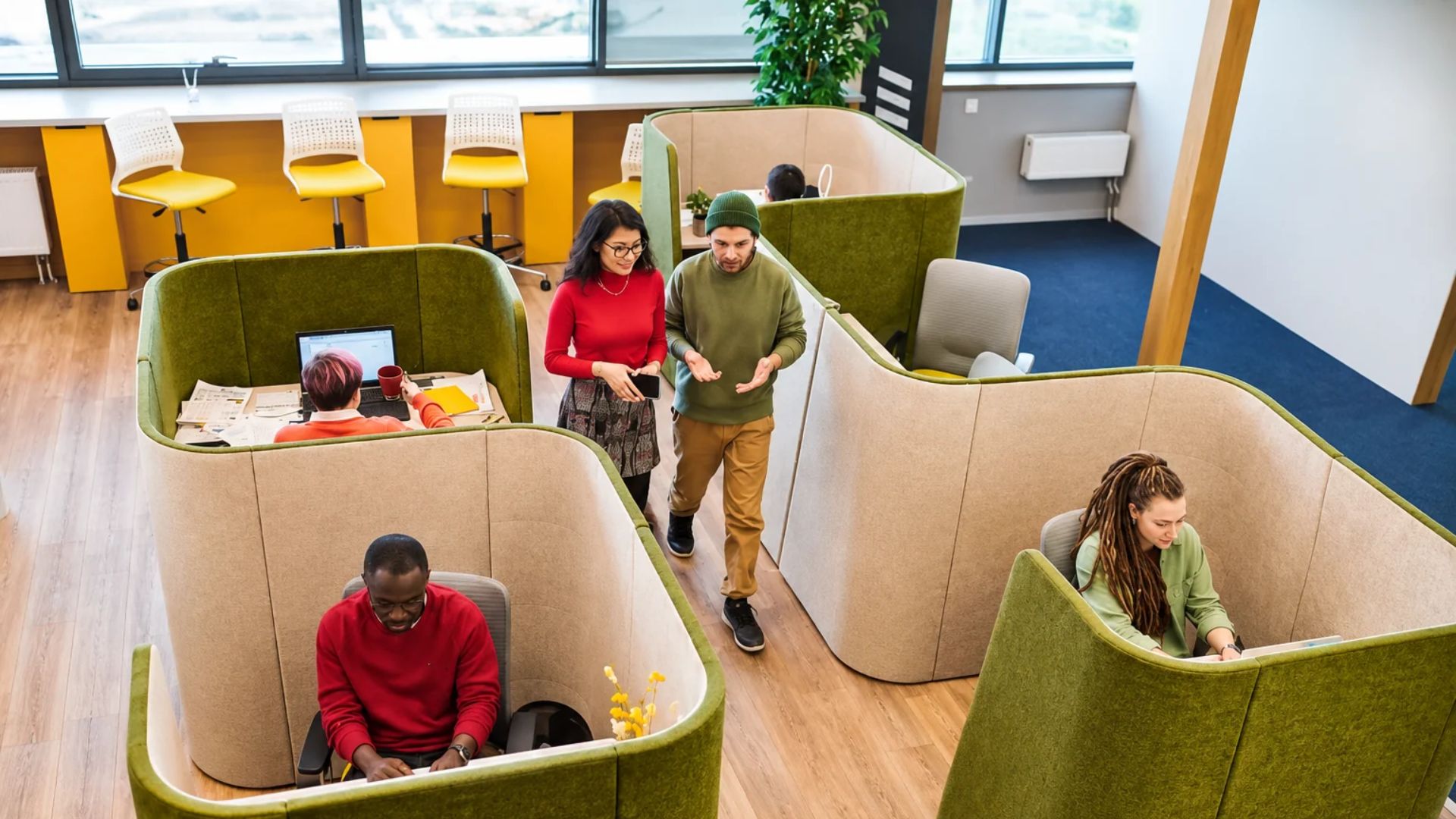
Five Questions to Ask Before Changing Your Office for AI
Before making decisions about a new fit out or renovation, business owners should begin with a clear understanding of what has changed in their operations. AI adoption is not a sufficient reason on its own to remove desks, introduce additional meeting rooms or reorganise departments. The following questions can help establish whether the existing office is still suitable and where improvements may be justified.
1. Which Tasks Have Actually Changed?
Identify the processes where AI is already being used and determine how much employee time those activities previously required. Consider whether the change has affected daily routines, communication patterns or the responsibilities assigned to particular roles. Distinguish between technology that employees occasionally experiment with and systems that have become part of normal business operations. Physical workplace decisions should be based on established changes rather than anticipated benefits alone.
2. Are Employees Working Differently or Simply Working Faster?
Completing routine tasks more efficiently does not necessarily change how employees use the office. In some businesses, time saved may be redirected towards additional work performed at the same workstation. In others, employees may spend more time meeting clients, reviewing complex information or working across departments. Understanding the difference helps determine whether changes to the physical layout are genuinely necessary.
3. Have Team Responsibilities and Working Relationships Changed?
Review whether employees now interact with different colleagues or departments as part of their daily responsibilities. AI-assisted processes may create new requirements for oversight, collaboration and specialist input, even where the overall organisational structure remains unchanged. Observe whether existing departmental arrangements support these interactions or make them unnecessarily difficult. Changes to working relationships can be more relevant to space planning than changes in job titles.
4. Are Existing Facilities Still Being Used as Intended?
Look at the actual use of meeting rooms, workstations, private offices and shared facilities rather than relying entirely on the original design brief. Some areas may remain busy while others no longer serve the purpose for which they were created. Employees may also be using spaces in unexpected ways because the facilities they need are unavailable elsewhere. These observations can reveal opportunities for targeted improvements without requiring a complete redesign.
5. Can the Office Adapt if the Business Changes Again?
AI adoption is unlikely to be a single event followed by a permanent return to predictable working practices. Businesses may introduce new tools, revise responsibilities and develop services that create further changes in how employees work. Consider whether the existing office can accommodate these developments without extensive construction or repeated furniture replacement. Adaptability should be evaluated against realistic operational scenarios rather than treated as a design feature that every space must include.
The Future Office May Not Be Smaller. It May Simply Need to Work Differently.
There is a temptation to imagine the AI-enabled office as a workplace with fewer employees, fewer desks and large areas devoted to technology. In reality, the outcome is likely to vary considerably between businesses, industries and individual departments. Some organisations may require less space for particular activities, while others may retain their existing footprint and change how that space is used. A professional services firm may find that employees spend more time on client consultations and specialist advice. An engineering company might use AI to assist with documentation while continuing to require technical workstations and project areas. A business with substantial administrative operations may gradually reorganise responsibilities as routine processes become more automated.
These businesses will not necessarily arrive at the same office design solution. Their physical requirements will depend on the nature of their work, their people, their technology and the commercial realities of their premises. The common factor is the need to understand what is changing before deciding how the workplace should respond. For companies in Cape Town, Durban and across South Africa, the question is therefore not whether every office should be redesigned for artificial intelligence. It is whether the existing workplace still reflects how the organisation operates and whether it can accommodate reasonable changes in the years ahead. That is a more practical starting point than following the latest office design trend.
Is Your Office Ready for the Way Your Business Works Next?
Your office may have been designed long before AI became part of everyday business conversations, but that does not automatically make it outdated. Many existing workplaces can continue to perform effectively, particularly where the physical environment already supports a range of responsibilities and working styles. Others may benefit from targeted changes that reflect new workflows, revised team structures or evolving technology requirements.
At Proturnkey, we approach commercial interiors by first understanding how a business operates and what its workplace needs to achieve. Our services bring together space planning, interior design, office renovations, furniture procurement and project management to develop practical solutions for commercial premises. We work with businesses in Cape Town, Durban and across South Africa to create workplaces that respond to operational requirements rather than assumptions about how offices should look.
Your business may be changing faster than your office, but that does not mean you need to start again.
The right starting point is a clear assessment of what is working, what has changed and where the existing environment may be limiting your business. If you are considering a workplace upgrade or planning your next commercial fit out, contact Proturnkey to discuss how your space can support the way your business works today and in the future.