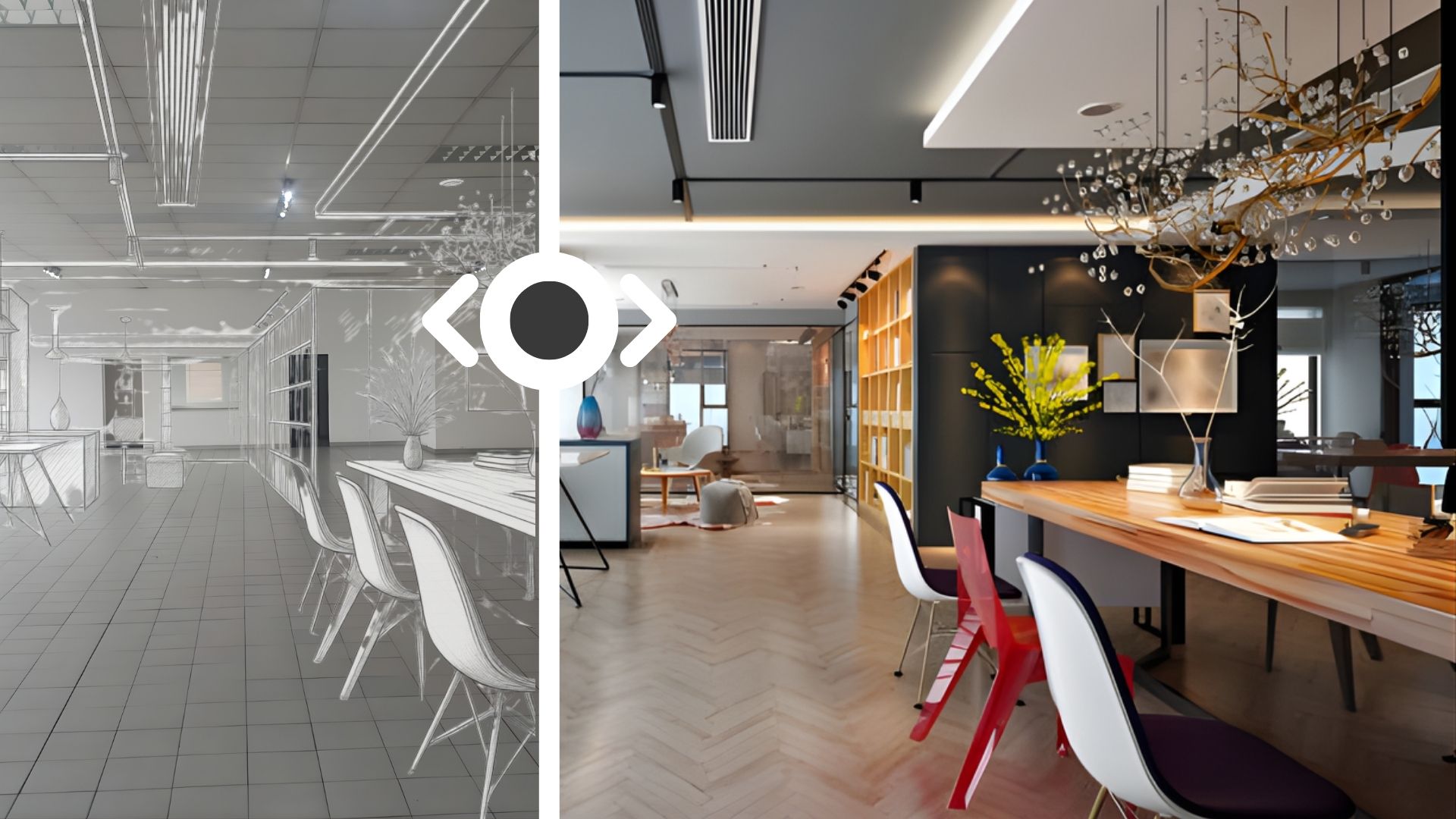
Moving into a new office space or upgrading your current one is a significant milestone for any business.
It often starts with excitement. New furniture is selected, finishes are considered and the vision for the space begins to take shape.
However, one of the most common and costly mistakes businesses make is starting with furniture instead of starting with a plan.
Desks are ordered. Chairs are selected. Storage units are chosen.
Only later does the question arise — will everything actually fit?
For businesses in Cape Town and Durban, where commercial space is both valuable and limited, this approach can lead to inefficiencies, wasted space and unnecessary costs.
The reality is simple. Furniture should never come first.
OFFICE FIT-OUTS VS RENOVATIONS
Why Furniture-First Thinking Leads to Problems
At a glance, selecting furniture feels like a logical starting point.
After all, desks and chairs are essential to any workspace. Without them, the office cannot function.
However, an office is not just a collection of furniture placed within a room. It is an environment designed to support movement, collaboration and productivity.
When furniture is selected without a clear layout, several issues begin to surface.
Workstations may be positioned too close together, limiting comfort and productivity. Walkways may feel cramped, disrupting natural movement through the space. Meeting areas may be poorly placed, creating noise and distraction.
In many cases, businesses only realise these issues once installation has already taken place.
At that stage, changes become costly.
Understanding Office Space Planning
Office space planning is the process of designing how a workspace will function before any physical elements are introduced.
It goes beyond simply fitting furniture into a room.
Instead, it considers how teams work, how departments interact and how the space supports both daily operations and long-term growth.
A well-planned office answers important questions early in the process.
How many people will use the space?
What type of work will be done?
Where are collaboration zones needed?
How should movement flow through the office?
By addressing these questions first, the layout becomes intentional rather than accidental.
The Relationship Between Layout and Furniture
Once a layout is established, furniture selection becomes significantly more effective.
Instead of choosing items based on appearance alone, decisions are guided by function and fit.
Each piece of furniture has a defined role within the space.
Desks are positioned to support workflow. Meeting tables are placed to encourage collaboration without disrupting other areas. Storage solutions are integrated in a way that supports accessibility without cluttering the environment.
This approach ensures that the space works as a cohesive system.
It also reduces the risk of over-ordering or underutilising space, both of which can impact cost.
Why Floor Plans Are Essential
A detailed floor plan is one of the most valuable tools in office design.
It provides a clear visual representation of how the space will function before any work begins.
Everything is mapped out in advance.
Desk placement, circulation routes, meeting rooms, breakout areas and storage zones are all considered within a single plan.
This level of detail allows businesses to make informed decisions early in the process.
In both Cape Town and Durban, where office space often needs to be maximised, a well-designed floor plan ensures that every square metre is used effectively.
Without it, space is often either overcrowded or underutilised.
The Cost of Getting It Wrong
The financial impact of poor planning is often underestimated.
At first, the cost may appear limited to furniture adjustments.
However, the reality is more complex.
Incorrect layouts can lead to reduced productivity, as employees struggle to work efficiently within the space. Poor flow can create frustration, while overcrowding can affect comfort and morale.
In some cases, businesses are forced to replace or reposition furniture shortly after installation.
This results in additional expenses that could have been avoided with proper planning.
Designing for Function, Not Just Aesthetics
It is easy to focus on how an office looks.
Clean lines, modern finishes and stylish furniture all contribute to a visually appealing space.
However, design is not only about aesthetics.
It is about how the space performs.
A well-designed office supports productivity, encourages collaboration and adapts to the needs of the business.
This is why space planning should always take priority over visual elements.
Once the layout works, the design can be layered on top of it.
Adapting for Growth and Change
One of the key advantages of proper space planning is flexibility.
Businesses evolve. Teams grow. Requirements change.
A layout that is designed with flexibility in mind can adapt to these changes without requiring a complete redesign.
Furniture can be repositioned, additional workstations can be introduced and new areas can be created without disrupting the overall structure.
This is particularly important for growing businesses in Cape Town and Durban, where scalability plays a key role in long-term success.
The Value of a Turnkey Approach
Managing space planning and furniture supply separately can lead to misalignment.
Different teams may work with different assumptions, resulting in inconsistencies between design and execution.
A turnkey approach eliminates this risk.
By managing the entire process — from planning to furniture supply and installation — everything is aligned from the start.
This ensures that the layout, furniture and final outcome all work together seamlessly.
FAQ: Office Space Planning and Furniture
Do I need a floor plan before buying office furniture?
Yes. A floor plan ensures that furniture fits correctly and supports how your space will function.
Can I use standard furniture in any office layout?
Not always. Furniture should be selected based on the layout to ensure proper spacing and usability.
How much space should be left between desks?
This depends on the design, but proper spacing is essential for movement, comfort and compliance.
Is space planning necessary for small offices?
Yes. In smaller spaces, planning is even more important to maximise efficiency and avoid overcrowding.
Plan First, Then Furnish
Office furniture is a significant investment.
However, without the right planning, even the best furniture can fail to deliver value.
The most successful office spaces are not built around furniture.
They are built around how the space needs to function.
For businesses in Cape Town and Durban, this approach ensures that every decision supports productivity, efficiency and long-term growth.
In the end, the question is not just whether your furniture will fit.
It is whether your space will work.