
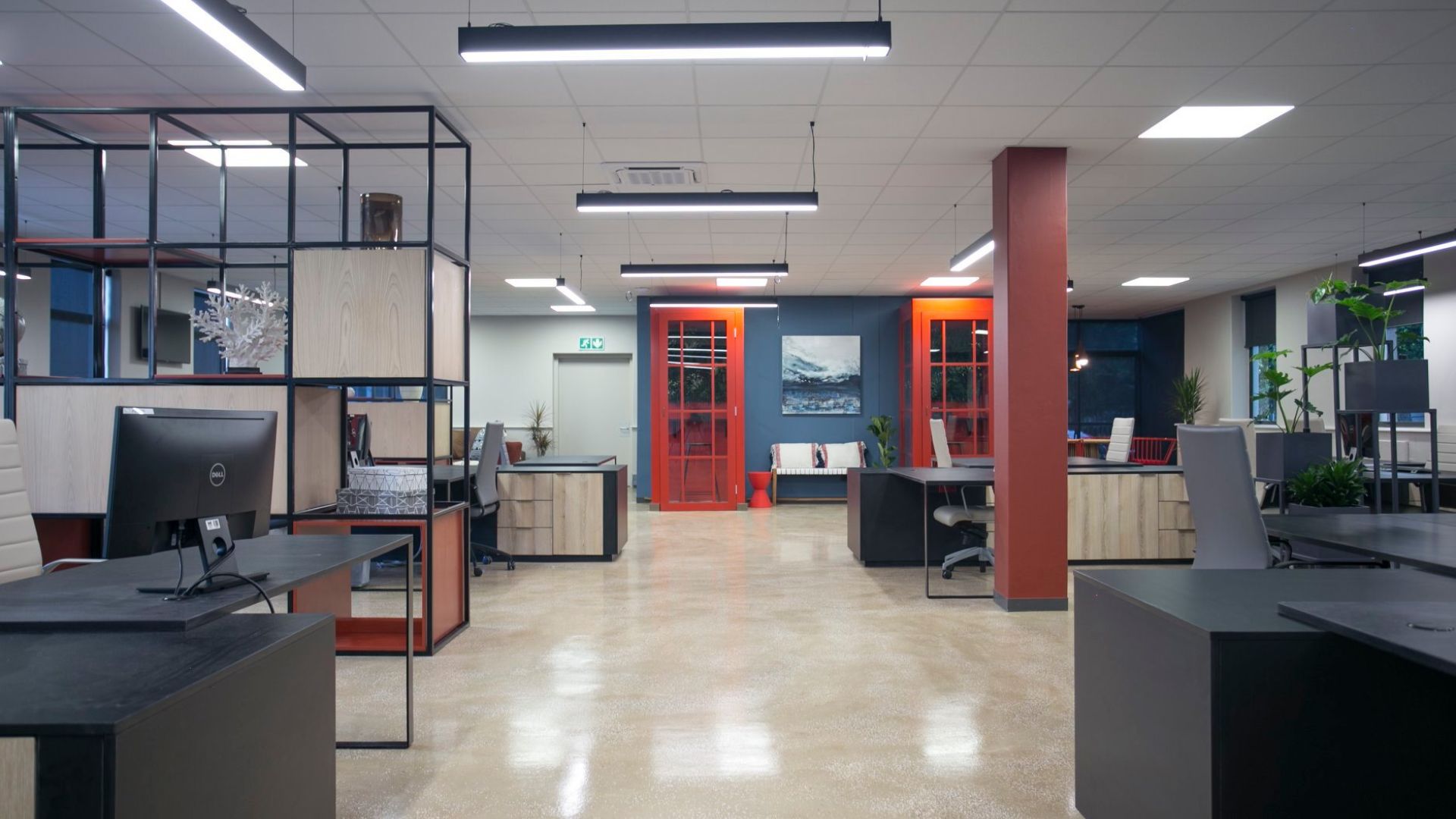
Businesses today are investing more in their people than ever before. Talent acquisition, retention, and productivity are top of mind for leadership teams navigating competitive markets. Yet, one critical factor often overlooked is the physical environment in which employees operate. Office design is no longer just about aesthetics or fitting in as many desks as possible. When approached strategically, it is a measurable driver of business outcomes.
Employee-centric office design prioritises the health, wellbeing, and performance of your workforce. Elements such as ergonomics, access to natural light, wellness zones, acoustic management, and thoughtfully designed workstations are not just nice-to-haves—they deliver tangible returns on investment.
Beyond Aesthetics: Design as Investment
Traditionally, office design was seen through a narrow lens: create a visually appealing space, select modern finishes, and organise furniture for capacity. While aesthetics still matter, modern workplaces require more strategic thinking.
Every design decision carries operational implications. Ergonomic furniture affects physical health and productivity. Wellness zones influence mental wellbeing and collaboration. Lighting and air quality impact focus, fatigue, and long-term employee satisfaction. When businesses invest in employee-centric design, they are investing in measurable operational benefits rather than superficial beauty.
Consider ergonomic seating. Poorly designed chairs and desks contribute to musculoskeletal disorders, chronic pain, and absenteeism. Studies have shown that investing in ergonomics can reduce lost workdays by up to 25 percent. Similarly, access to natural light has been linked to higher energy levels, reduced errors, and improved mood. Employees working in daylight-rich environments report a 15 percent increase in productivity compared to those in poorly lit spaces.
Wellness zones, including breakout areas and quiet spaces, support cognitive recovery and collaboration. Without these zones, employees are more likely to experience fatigue, stress, and burnout. A strategically designed environment integrates these spaces seamlessly, ensuring that employees can recharge mentally and physically throughout the day.
Every square metre becomes an investment. When approached with intentionality, office design is no longer a cost centre—it is a value driver.
Quantifying Productivity Gains from Design
Productivity is a primary metric through which the ROI of office design is measured. Employee-centric spaces reduce distractions, support focus, and improve workflow. The design of the office influences both individual performance and team efficiency.
Lighting is a key contributor. Poor artificial lighting can lead to eye strain, headaches, and decreased concentration. Access to natural daylight enhances circadian rhythms, improving alertness and reducing fatigue. Research conducted by the Harvard T.H. Chan School of Public Health indicates that workers exposed to more natural light experienced a 23 percent improvement in sleep quality, which translates directly into more alert and productive days at work.
Acoustics also play a critical role. Open-plan offices, while popular, often introduce noise challenges that reduce cognitive performance. Distraction from background noise can lower productivity by 15 percent, according to studies referenced in the Harvard Business Review. Acoustic treatments, designated quiet zones, and collaborative pods help employees focus when deep work is required and collaborate efficiently when interaction is needed.
Ergonomic workstations prevent physical strain and reduce absenteeism. Poorly designed seating and desk setups are linked to musculoskeletal issues, the leading cause of workplace disability globally. Proper height-adjustable desks, supportive chairs, and monitor alignment not only improve comfort but also enable employees to sustain longer periods of focus, enhancing output over time.
Breakout and wellness areas serve as intentional spaces for mental recovery. Studies in environmental psychology suggest that even short breaks in designated spaces improve creativity and problem-solving by allowing cognitive processing to occur away from the desk. This directly supports productivity metrics and reduces error rates in knowledge-based work environments.
Ultimately, productivity gains are not just anecdotal. Companies that have integrated employee-centric design report measurable improvements in output, quality of work, and engagement scores.
Retention, Recruitment, and Workplace Appeal
Retention and recruitment are increasingly influenced by workplace design. In a tight talent market, companies are competing not only on salary and benefits but also on the environment they offer.
A well-designed office communicates that the company values its people. Ergonomic seating, wellness zones, collaborative spaces, and access to daylight signal an investment in employee wellbeing. This perception improves retention rates, reducing turnover costs, which can range from 50 to 200 percent of an employee’s annual salary depending on seniority.
Recruitment is equally impacted. Millennials and Gen Z, who make up an increasingly large proportion of the workforce, prioritise workplace environment and culture. Offices that provide spaces for collaboration, quiet focus, and wellness attract higher-quality candidates. In fact, surveys show that 72 percent of candidates would consider workplace environment a deciding factor when accepting a job offer.
The benefits of design extend beyond recruitment and retention. Employees who feel comfortable, valued, and supported by their environment are more engaged and motivated. Engagement directly correlates with reduced absenteeism, higher productivity, and increased profitability.
Measuring ROI: Metrics That Matter
To justify investment in employee-centric office design, leadership teams require measurable outcomes. The ROI can be evaluated across multiple dimensions:
Reduced Absenteeism:
Ergonomic and wellness-focused offices lower the incidence of physical strain, stress-related illness, and fatigue. Companies report decreases in absenteeism ranging from 10 to 25 percent after redesigning office layouts with employee wellbeing in mind.
Improved Productivity:
Metrics such as output per employee, error rates, and project completion timelines can reflect the benefits of a well-designed space. Studies suggest that workplaces optimised for ergonomics, daylight, and acoustics can increase productivity by up to 15 percent.
Employee Engagement:
Engagement surveys before and after office redesigns can quantify changes in satisfaction, collaboration, and morale. Higher engagement scores correlate with higher retention and overall business performance.
Recruitment Efficiency:
Time-to-hire and candidate acceptance rates can indicate the attractiveness of the workplace environment. Modern, employee-centric offices can reduce recruitment timelines and attract stronger candidates.
Operational Cost Savings:
While upfront investment in ergonomics, lighting, and wellness zones may appear significant, long-term operational costs often decrease. Reduced absenteeism, lower turnover, fewer workplace injuries, and improved productivity contribute to tangible financial benefits.
By tracking these metrics, businesses can clearly demonstrate that the investment in employee-centric design is not aesthetic indulgence but a strategic decision that drives measurable returns.
Design Considerations for Maximum Impact
For an office to deliver ROI through employee-centric design, specific principles must be applied.
Ergonomics should be standard, not optional
Height-adjustable desks, supportive chairs, monitor arms, and keyboard positioning are essential.
Natural light and biophilic elements
Plants, daylight exposure, and views of the outdoors—improve alertness and mood, reducing errors and fatigue.
Acoustic treatments
Sound-absorbing panels, partitions, and quiet pods enable employees to focus when needed, reducing stress and enhancing cognitive performance.
Wellness zones
This provides opportunities for mental breaks and informal collaboration, improving creativity and problem-solving.
Flexibility in layout
Ensures that teams can reconfigure workstations for evolving projects or changing headcounts, preventing space inefficiencies and supporting collaboration.
Integration of technology
Enhance workflows without creating clutter. Power and data access, AV systems, and collaboration tools must align with space design and operational needs.
By combining these elements strategically, an office becomes a tool for enhancing performance, rather than just a space where work happens.
Strategic Takeaways for Leadership Teams
Leaders often focus on financial performance, headcount, and operational efficiency, sometimes overlooking the direct influence of physical space on outcomes. Employee-centric office design bridges that gap.
A well-designed workplace supports productivity, engagement, and wellbeing. It reduces absenteeism, prevents fatigue, and improves collaboration. It also makes the company more attractive to top talent and increases retention rates, reducing recruitment and training costs.
Every square metre of office space can contribute to measurable business value when designed intentionally. Investment in employee-focused design is therefore an investment in both people and profitability.
