
Most businesses conduct regular reviews throughout the year. Financial performance is measured against budgets, sales targets are evaluated, operational processes are refined and strategic plans are adjusted where necessary. These reviews help businesses remain agile and ensure they stay on track to achieve their objectives.
One area that is rarely reviewed with the same level of attention, however, is the workplace itself.
The office is where your teams spend most of their working day. It influences productivity, collaboration, client experience and employee satisfaction, yet many organisations only reconsider their workspace when they relocate or undertake a major renovation. By that stage, inefficiencies have often become embedded in daily operations, making them more difficult and expensive to resolve.
The middle of the year provides an ideal opportunity to step back and evaluate whether your workplace is still supporting the way your business operates today. Departments may have expanded, hybrid working patterns may have evolved, technology may have changed or your priorities may have shifted since January. A workspace that functioned well six months ago may no longer be delivering the same level of value.
A mid-year office audit is not about identifying reasons to renovate unnecessarily. Instead, it is about understanding how your workplace is performing, recognising opportunities for improvement and ensuring every area continues contributing to your business objectives. Sometimes the solution is a simple operational adjustment. In other cases, it may highlight the need for a more strategic office reconfiguration or refurbishment.
Businesses that regularly evaluate their workplace make better long-term decisions because they identify challenges before they become costly problems. Rather than reacting when space runs out or productivity begins to suffer, they remain proactive and ensure their office continues supporting both their people and their business.
Start by Looking at Your Office Through Fresh Eyes
One of the easiest ways to uncover opportunities for improvement is to experience your workplace as though you were seeing it for the first time. Familiarity often causes businesses to overlook issues that have gradually become part of everyday life. What once felt like a temporary solution may now be accepted as normal, despite creating unnecessary friction for employees or leaving the wrong impression on clients.
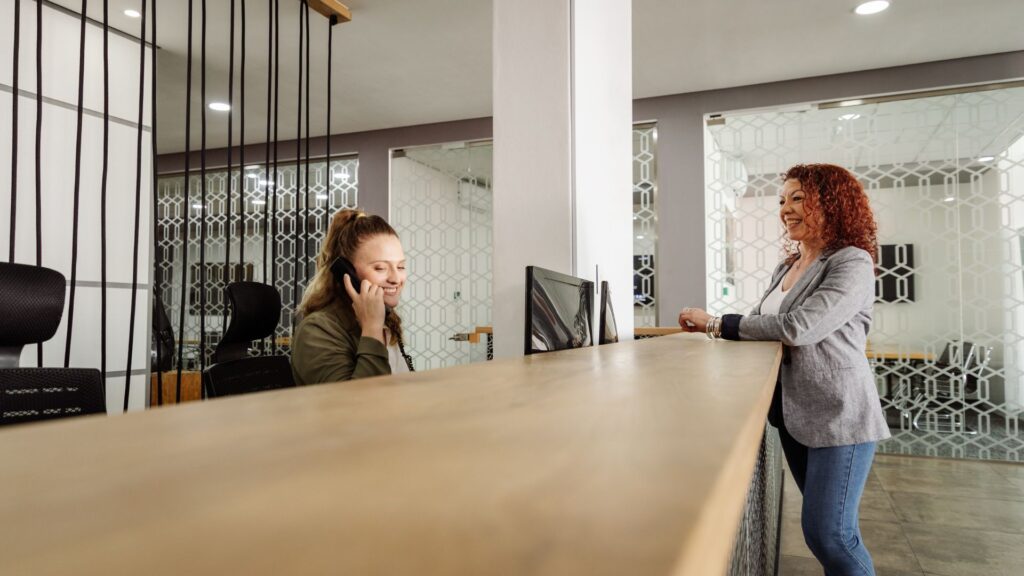
Begin your audit at the entrance to your building. Consider what a visitor experiences from the moment they arrive. Is your reception area welcoming, organised and reflective of your brand? Is signage clear and professional? Does the space feel well maintained, or are there visible signs of wear that no longer represent the standards of your business?
Continue walking through the office as though you were a prospective client or a potential employee attending an interview. Observe the cleanliness of communal areas, the condition of furniture, the quality of lighting and the overall atmosphere. These seemingly small details contribute significantly to how your organisation is perceived. They also influence how employees feel about the workplace they spend so much of their time in.
This exercise should not focus solely on aesthetics. A workplace can appear visually impressive while still performing poorly. The goal is to identify areas where the office no longer aligns with the way your business operates or the image you want to project. Often, these observations provide valuable insights that would otherwise remain hidden simply because everyone has become accustomed to the environment.
Assess How Your Teams Are Actually Using the Space
The original office layout was likely designed around assumptions about how different departments would work together. Over time, however, those assumptions may no longer reflect reality. Teams grow, responsibilities change and working styles evolve. Without regular review, the workplace can quickly fall behind the operational needs of the business.
Spend time observing how different spaces are used throughout a typical week. Notice which meeting rooms are consistently occupied and which remain empty. Look at collaboration spaces to see whether employees naturally gather there or whether they prefer working elsewhere. Pay attention to individual workstations, breakout areas and quiet zones to determine whether they continue serving their intended purpose.
It is equally important to identify spaces that employees avoid. An unused collaboration area may indicate that its location is inconvenient or that it simply does not support the type of interaction the team requires. Likewise, departments that frequently overflow into neighbouring spaces may be signalling that the current layout is no longer appropriate.
Many businesses are surprised by what they discover during this stage of the audit. The office often tells a very different story from the one reflected on the original floor plan. Understanding these patterns provides valuable information that can help improve productivity, increase space efficiency and create a workplace that better supports day-to-day operations.

Look Beyond Desks and Meeting Rooms
Many office audits focus almost exclusively on desks, offices and meeting rooms. While these spaces are undoubtedly important, they represent only part of the workplace experience. The areas between formal workspaces often have an equally significant impact on productivity, collaboration and employee wellbeing.
Consider whether your breakout spaces are being used as intended or whether employees are gathering elsewhere because those areas feel more comfortable. Evaluate the kitchen and pause areas to determine whether they encourage informal interaction or simply serve as functional spaces for making coffee. Even circulation routes deserve attention. Congested walkways, poorly positioned printers or awkward storage areas can interrupt workflow throughout the day without anyone consciously recognising the impact.
Technology should also form part of the audit. Meeting rooms equipped with outdated conferencing equipment, insufficient charging points or poor connectivity often create unnecessary frustration and reduce the effectiveness of collaboration. Similarly, storage requirements may have changed considerably if your business has embraced digital document management or hybrid working practices.
Looking beyond the obvious workspaces allows businesses to identify opportunities that improve the overall workplace experience rather than focusing solely on where employees sit. These incremental improvements often deliver meaningful operational benefits while avoiding the disruption associated with large-scale renovations.
Evaluate Whether Your Workplace Still Reflects Your Brand
Your office is more than a place where work gets done. It is a physical representation of your business and one of the first impressions clients, suppliers, prospective employees and business partners form when they walk through your doors. While branding often focuses on websites, marketing materials and digital communication, the workplace itself is one of the most powerful expressions of who your organisation is.
Take a moment during your audit to consider whether your office still reflects your company today. Has your business evolved over the past few years? Have your services expanded or your culture changed? If your organisation has become more collaborative, innovative or client-focused, does your workplace communicate those qualities, or does it still reflect a version of the business that no longer exists?
This review should go beyond logos on the wall or corporate colours in the reception area. Consider whether your meeting spaces support the type of conversations you want to have with clients. Think about whether the reception area creates the right first impression and whether communal spaces encourage the culture you are trying to build. Even details such as lighting, furniture, finishes and signage contribute to the overall perception of your business.
A workplace that accurately reflects your brand creates confidence. Employees feel proud of where they work, clients feel reassured they are dealing with a professional organisation and visitors gain a clear understanding of your company’s standards before a meeting even begins. Ensuring your workplace aligns with your brand is not about keeping up with design trends. It is about creating consistency between what your business promises and what people experience when they visit.
Review Your Workplace Against Your Business Goals
A successful office should support where your business is going, not simply where it has been. As you reach the midpoint of the year, it is worth comparing your workplace with the goals you set at the beginning of the year. Have you recruited additional staff? Have certain departments grown faster than expected? Has hybrid working become more established, or are more employees returning to the office? These changes all influence how effectively your workplace performs.
Growth is not the only factor worth reviewing. Businesses often introduce new technologies, expand their service offerings or change the way teams collaborate. While these operational changes are carefully planned, the workplace does not always evolve at the same pace. As a result, organisations often find themselves working around a space that no longer supports their day-to-day activities as effectively as it once did.
This part of the audit should involve conversations with department managers and employees. Ask what is working well and where they experience unnecessary challenges. You may discover that meeting rooms are constantly overbooked, storage has become inadequate or quiet spaces for focused work are no longer sufficient. These conversations often reveal practical improvements that leadership teams may not have identified on their own.
Rather than viewing the workplace as a fixed asset, businesses should treat it as a dynamic environment that evolves alongside the organisation. A workplace that continues supporting business objectives throughout the year contributes directly to productivity, employee engagement and operational efficiency.
Small Improvements Can Deliver Significant Results
One of the biggest misconceptions about workplace reviews is that they inevitably lead to expensive renovations or large-scale office fit-outs. In reality, many of the most valuable improvements involve relatively small changes that have a meaningful impact on how people experience the workplace every day.
Repositioning departments to improve communication, creating additional collaboration spaces, introducing flexible workstations or upgrading meeting room technology can often resolve operational challenges without major construction. Improving lighting, decluttering storage areas or refreshing tired communal spaces may also have a surprisingly positive effect on employee satisfaction and the overall perception of the workplace.
Of course, some audits will reveal more significant issues that require a comprehensive redesign or refurbishment. However, identifying these needs early allows businesses to plan strategically rather than reacting under pressure when problems become impossible to ignore. This approach helps manage budgets more effectively while reducing disruption to daily operations.
The value of a mid-year office audit lies in its ability to identify opportunities before they become obstacles. Businesses that make small, proactive improvements throughout the year are often better positioned than those who wait until the workplace has become inefficient or no longer supports their operations.
A Better Workplace Starts with Regular Reviews
Just as businesses monitor financial performance, customer satisfaction and operational efficiency, the workplace deserves regular attention. Offices are not static environments. They evolve as businesses grow, technology advances and employee expectations change. Without periodic reviews, it is easy for the workplace to fall out of alignment with the organisation it is meant to support.
A mid-year office audit provides an opportunity to pause, observe and ask important questions. Is every space still being used effectively? Does the workplace reflect your brand? Are your teams able to work efficiently? Is the office ready to support your goals for the remainder of the year?
These questions are not only relevant when planning a renovation. They are valuable for every business, regardless of its size or stage of growth. Understanding how your workplace performs today allows you to make informed decisions about tomorrow.
At Proturnkey, we believe the best office environments are those that continue evolving alongside the businesses they serve. Through strategic workplace planning, office fit-outs and commercial interior design, we help organisations create workplaces that remain functional, flexible and aligned with their long-term goals.
If your business has never completed a workplace review, there is no better time than now. A few hours spent evaluating your office today could lead to improvements that benefit your business for years to come.
Frequently Asked Questions
How often should a business complete an office audit?
A workplace audit should ideally be completed at least once a year. Many businesses find that a mid-year review is particularly valuable because it allows them to assess how the workplace is performing before planning for the year ahead.
What should be included in an office audit?
An effective office audit should review space utilisation, employee workflow, meeting rooms, collaboration areas, technology, furniture, storage, branding, accessibility and the overall employee and visitor experience.
Can an office audit improve productivity?
Yes. Identifying underutilised spaces, workflow challenges and operational inefficiencies allows businesses to make targeted improvements that help employees work more effectively.
Does an office audit always lead to a renovation?
No. Many workplace improvements involve simple operational changes rather than major construction. The purpose of an audit is to identify opportunities for improvement, whether they require small adjustments or a larger office refurbishment.
Who should be involved in an office audit?
Business owners, facilities managers, HR teams, department leaders and employees should all contribute to the process. Different perspectives often reveal valuable insights into how the workplace is performing.
Why is a mid-year office audit beneficial?
A mid-year review gives businesses the opportunity to assess whether their workplace is still aligned with current operations and business goals, allowing them to make proactive improvements before challenges become larger and more expensive to resolve.
Your workplace should evolve alongside your business. Taking the time to review how your office is performing today can uncover opportunities to improve productivity, strengthen your brand and better support your people. If you’re considering changes to your workspace, Proturnkey is ready to help you create an environment that works harder for your business today and well into the future.