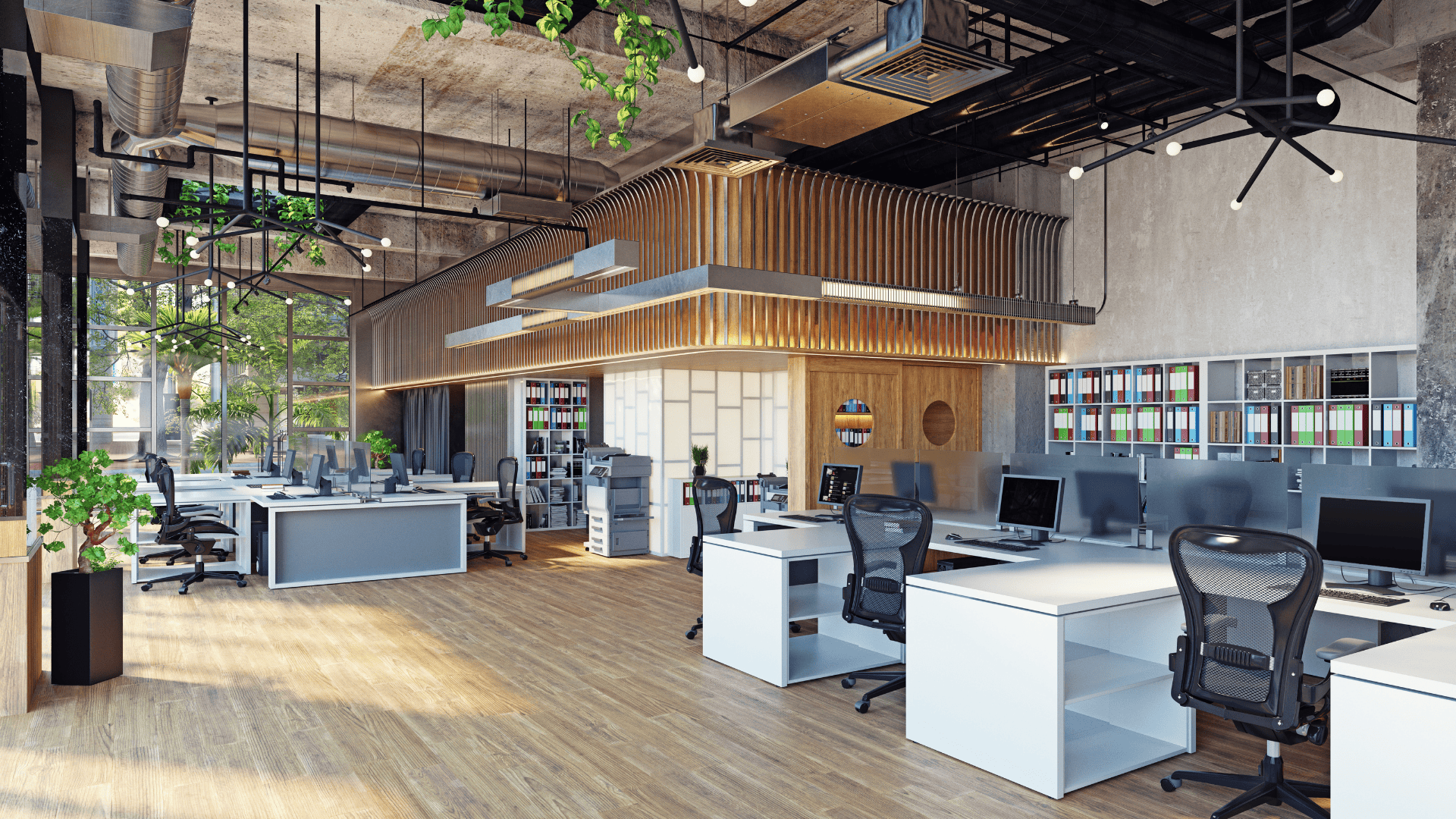
Most office fit-outs begin the same way. A company signs a lease, hands over a floor plan, and waits for a designer to fill the space. The result looks professional. It functions adequately. But six months in, the business has outgrown a section, a department is working around a layout that never suited them, and the meeting room count is already wrong.
At Pro Turnkey, we start every project with a business conversation, not a brief. The more we understand about how your company operates today, and where it intends to go, the better the workspace we build for you. That is not a sales position. It is the only logical approach to creating a space that actually performs.
The problem is not the design. The problem is the starting point.
A Workspace Is a Business Tool
Your office is not a backdrop. It is infrastructure. It shapes how your people communicate, how teams collaborate, how clients perceive you, and how efficiently work moves through your organisation. When a space is designed around genuine operational understanding, it removes friction. When it is designed around assumptions, it creates it. Think about the basics. A legal firm has different workflow requirements to a tech startup. A call centre has different acoustic needs to a creative agency. A business that plans to double headcount in 18 months needs a different approach to one that is rightsizing after a restructure. These are not design details. They are business realities, and they must drive every decision about your space.
Learn more about our Space Planning Services in Cape Town
What "Understanding Your Business" Actually Means
When Pro Turnkey talks about understanding your business, we mean something specific. We are not referring to a generic needs analysis form or a 30-minute site walk. We mean a structured, detailed engagement that covers several layers of how your organisation actually works.
How your people work day to day. Do your teams operate in fixed desks or do they move between tasks and spaces? Are there departments that collaborate constantly or functions that require deep focus and separation? What does a typical Tuesday look like for your busiest team?
How your leadership wants the culture to feel. An office communicates values before anyone says a word. Open, transparent spaces signal one thing. Enclosed, structured environments signal another. Neither is right or wrong. What matters is that the space reflects what you are actually trying to build.
Where your headcount is going. A fit-out locked to your current team size is a liability the moment you start hiring. We need to understand your growth trajectory, your hiring plans, and your expected shifts in departmental weighting. A space designed with that knowledge built in gives you flexibility without full-scale disruption when the time comes.
What your client-facing requirements are. Do you bring clients into the space? How often? What impression do you need to create at the front door and in the boardroom? That shapes reception, meeting room allocation, and the overall client journey through the office.
What your operational constraints are. IT infrastructure, storage, server rooms, compliance requirements, accessibility, parking, shift patterns. These are not afterthoughts. They are design inputs.
The Cost of Skipping This Process
Businesses skip or rush this process for understandable reasons. There is time pressure from the lease start date. There is budget pressure from leadership. There is an assumption that a good designer will figure it out from the drawings. The cost shows up later. It shows up as a breakout area that nobody uses because it was placed without understanding how that team actually takes breaks. It shows up as a meeting room shortage on days when the whole company is in the office, because nobody mapped peak attendance patterns. It shows up as a department crammed into a corner because the layout assumed equal team sizes that never existed.
Retrofitting a space that has already been built out is expensive. More than the financial cost, it is disruptive. People work around problems rather than fixing them, and over time, those workarounds become part of the culture. Getting it right from the start is not more expensive. It is less expensive when measured across the life of the lease.
How Pro Turnkey Builds the Partnership
The engagement process at with us is built around understanding before designing. Here is what that looks like in practice. We begin with a discovery session that brings the right people into the room. Not just the person who signed the brief, but the department heads, the HR lead if people and culture is a priority, and ideally someone from finance who understands the operational budget and growth projections. The decisions that get made in this session shape every square meter of the final design. From there, we map the operational structure of the business onto the physical requirements of the space. This is where we identify where collaboration needs to happen, where focus work needs protection, where leadership needs visibility, and where the business needs room to grow without a full redesign.
We then test assumptions. If you tell us you need eight private offices, we ask why. If the answer is about status rather than function, we explore alternatives that achieve the same cultural outcome at lower cost and with more spatial efficiency. If the answer is genuinely operational, we design around it. The design brief that comes out of this process is detailed and specific. It is not a list of aesthetic preferences. It is a spatial translation of how your business works and where it is going.
Growth Planning Is Not Optional
One area where the partnership model pays the clearest dividend is growth planning. A business that expects to grow from 40 to 70 people in two years is not the same as a business that is static. The fit-out needs to accommodate that trajectory. That means designing flexibility into the layout, building infrastructure that can scale, and avoiding spatial commitments that lock you into a configuration you will outgrow. This does not mean building for a headcount you do not have yet and wasting space in the interim. It means designing with growth in mind from the start, so that when the time comes to add workstations or reconfigure a zone, you are making a minor adjustment rather than a major disruption. Pro Turnkey maps this out with you at the start. We look at your lease term, your growth targets, and the natural expansion or contraction points in your business cycle. The result is a space that serves you on day one and continues to serve you three years later.
The Spaces That Work Best Are Built on Honest Conversations
The offices that perform consistently over time share a common origin. Someone asked hard questions at the start. Someone pushed back on the assumptions. Someone connected the physical decisions to the business realities. That is what a strategic partnership between a business and its interior design company looks like. It is not about having the most elaborate brief or the longest discovery process. It is about the quality of the conversation and the willingness of both parties to be direct about what the business actually needs. When Pro Turnkey works with a tenant, we are not trying to build the most impressive space we can. We are trying to build the right space for that specific business at that specific point in its growth. That requires us to understand your business at a level that goes beyond the floor plan.
If you are planning an office fit-out or a move to new space, the most valuable thing you can do before any design work begins is have that conversation. Not about colours and finishes. About how your business works, where it is going, and what your people need to do their best work. That is where the project starts. Everything else follows.
Pro Turnkey delivers complete office fit-out and interior design solutions across South Africa. Contact our team to start your project with the right conversation.