
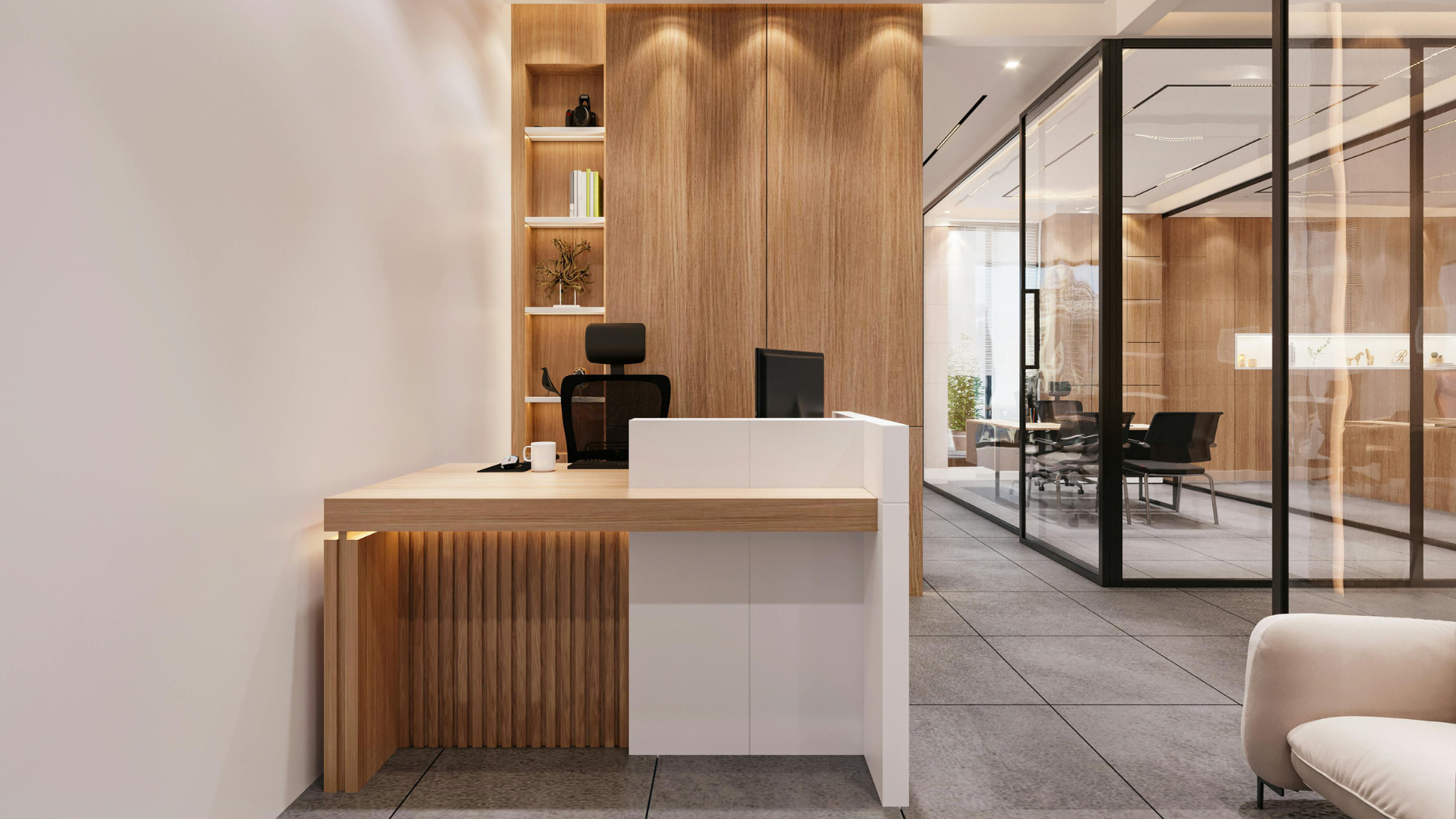
When organisations plan a new office or renovate an existing workspace, furniture is often one of the final decisions. Layouts are approved, finishes are selected and construction is underway before desks, storage and meeting tables enter the conversation.
Yet furniture plays a far greater role than simply filling space.
It defines how people work. It influences movement through the workplace. It shapes collaboration, concentration and comfort.
This is where custom office furniture and integrated joinery begin to change the conversation.
Rather than relying solely on standard furniture systems, many organisations are investing in built in office furniture designed specifically for their workspace. Custom joinery allows workplaces to use space more intelligently while reinforcing brand identity and improving day to day functionality.
Across modern commercial interiors, this approach is becoming increasingly common. Businesses are recognising that tailored furniture solutions often deliver greater value than generic alternatives.
Custom office furniture is not simply about appearance. It is about designing the workplace to perform better.
Understanding Custom Joinery in Office Design
Custom joinery refers to furniture and architectural elements that are designed and built specifically for a space. Instead of selecting pre manufactured desks or cabinets from a catalogue, designers create solutions that respond directly to the layout, scale and operational needs of the workplace.
These elements often include integrated desks, storage walls, reception counters, collaboration benches and meeting room cabinetry.
Unlike freestanding furniture, joinery becomes part of the architecture of the space. It is measured precisely, fabricated for the environment and installed as a permanent feature.
This approach allows designers to address challenges that standard furniture cannot always solve. Awkward corners can become storage zones. Structural columns can be incorporated into shelving systems. Meeting areas can include integrated screens, power and acoustic panels.
The result is a workspace that feels cohesive and intentional rather than assembled from separate components.
Custom office furniture is therefore less about decoration and more about intelligent space planning.
Designing Furniture Around the Way Teams Work
Every organisation operates differently.
Some businesses require large collaborative work areas where teams interact throughout the day. Others depend on focused individual work supported by quiet zones and enclosed rooms.
Standard furniture systems are often designed for the broadest possible market. While they offer flexibility, they may not fully support the specific way a particular company operates.
Custom joinery allows designers to shape furniture around real operational needs.
Desking systems can be sized according to team workflows. Collaboration benches can support spontaneous discussion. Integrated storage can reduce visual clutter and improve organisation.
Even small adjustments can significantly improve usability. Desk depth, storage access and meeting table proportions all influence how comfortably employees work within the space.
When furniture responds to the way people actually work, productivity and comfort improve.
Making Better Use of Available Space
Space efficiency is one of the strongest arguments for built in office furniture.
Commercial office space represents a significant investment for most organisations. Rental costs, operational expenses and long term lease commitments make efficient planning essential.
Standard furniture often leaves unused gaps between walls, partitions or structural elements. While these gaps may seem minor individually, they accumulate across the workspace.
Custom joinery eliminates these inefficiencies.
Storage walls can extend precisely from floor to ceiling. Desks can align perfectly with architectural features. Collaboration seating can be integrated into circulation zones that would otherwise remain empty.
This level of precision allows businesses to maximise usable space without overcrowding the office.
In smaller offices, this approach can be particularly valuable. Built in storage or integrated meeting benches may free up additional floor area that would otherwise be occupied by freestanding furniture.
Even in larger corporate environments, efficient joinery design contributes to cleaner layouts and improved spatial flow.
Built in Storage That Supports Organisation
Storage is frequently underestimated in workplace design.
As organisations transition to hybrid work models and digital systems, it is easy to assume that less storage is required. In reality, physical materials, equipment and shared resources still need carefully planned locations.
Poorly designed storage can quickly lead to clutter, disorganisation and visual noise.
Custom joinery allows storage to be integrated seamlessly into the architecture of the workspace.
Floor to ceiling cabinetry can house shared resources while maintaining a clean aesthetic. Lockers can be incorporated into circulation zones to support flexible work environments. Meeting rooms can include concealed storage for technology and presentation materials.
When storage is integrated thoughtfully, it becomes both functional and visually consistent with the broader interior design.
This contributes to a calmer and more organised workplace environment.
Strengthening Brand Identity Through Custom Furniture
A workplace is often one of the most powerful physical expressions of a company’s brand.
Clients, partners and employees form impressions the moment they enter the space. Colours, materials and layout all communicate something about the organisation’s culture and values.
Custom office furniture plays a significant role in reinforcing this identity.
Reception counters, feature walls and collaborative furniture can incorporate materials that reflect the brand’s personality. Timber finishes may communicate warmth and craftsmanship. Metal and glass elements may reinforce a more technical or contemporary identity.
Integrated lighting, textured panels and carefully detailed joinery can elevate the overall experience of the workspace.
Standard furniture rarely offers this level of alignment with brand expression.
When furniture is designed specifically for the environment, it becomes part of the storytelling of the workplace.
Reception Areas as a Focal Point
Reception spaces are often where custom joinery has the most visible impact.
The reception counter typically becomes the centrepiece of the arrival experience. It sets expectations about professionalism, attention to detail and brand quality.
Custom designed reception counters allow designers to incorporate materials, lighting and proportions that align with the broader interior concept.
Integrated storage ensures the space remains organised while maintaining a clean appearance. Lighting can highlight architectural features or company branding.
This level of detail transforms the reception area from a simple desk into a defining feature of the workplace.
Longevity and Quality in Commercial Interiors
Another important advantage of custom joinery is durability.
Off the shelf furniture systems are designed for mass production and rapid installation. While many options offer acceptable performance, they may not always withstand long term commercial use.
Custom office furniture is typically fabricated from higher quality materials and assembled using construction techniques suited to demanding environments.
Cabinetry is built to support heavy use. Work surfaces are selected for durability and easy maintenance. Hardware components are chosen for reliability.
Because joinery is integrated into the architecture of the space, it also tends to age more gracefully than freestanding furniture.
Over time, this durability contributes to lower replacement costs and fewer disruptions within the workplace.
Achieving Visual Cohesion Across the Workplace
One of the most noticeable differences between offices with standard furniture and those with integrated joinery is visual cohesion.
Freestanding furniture often introduces multiple colours, materials and proportions into the workspace. Even when products are selected carefully, the environment can feel slightly fragmented.
Custom office furniture allows designers to carry consistent materials and design language throughout the interior.
Timber finishes used in a reception desk can continue into meeting room cabinetry. Storage units can align visually with feature walls or partitions. Desk systems can incorporate the same detailing found in architectural elements.
This consistency creates a more polished and professional environment.
Employees experience a workplace that feels thoughtfully designed rather than assembled piece by piece.
Supporting Collaboration and Modern Workstyles
Workplace behaviour continues to evolve as organisations adopt hybrid work models and flexible working arrangements.
Traditional desk layouts are being replaced by environments that support collaboration, focused work and informal interaction.
Custom furniture solutions play an important role in enabling this shift.
Integrated collaboration benches encourage spontaneous discussion. Built in seating areas support informal meetings. Multi functional joinery elements can combine storage, seating and technology access within a single structure.
Because these elements are designed for the specific workplace, they fit naturally into the overall layout.
Employees benefit from spaces that support different types of work throughout the day.
The Strategic Value of Custom Office Furniture
For many organisations, the initial attraction of standard furniture lies in convenience. Catalogue systems are easy to specify and quick to install.
However, the long term benefits of custom joinery often outweigh these short term advantages.
Built in office furniture allows workplaces to use space more efficiently, reinforce brand identity and support the way teams actually work.
It also contributes to higher quality interiors that age better over time.
As businesses place greater emphasis on employee experience and workplace performance, furniture decisions are becoming more strategic.
Custom office furniture is no longer seen as a luxury feature reserved for flagship offices. It is increasingly recognised as a practical solution that improves functionality, aesthetics and long term value.
When thoughtfully designed and integrated into the overall interior concept, joinery becomes more than furniture.
It becomes part of the architecture of a workplace that is built to perform.
